



Address of the Holy Father -Meeting with Bishops, Priests, Consecrated Persons and Pastoral Workers- Harissa
December 01, 2025 · 12:20
Dear brothers in the Episcopate,
Dear brother priests and religious,
Dear brothers and sisters, good morning! Sabah al-khayr (in Arabic)
It is a great joy for me to meet with you during this journey, which has "Blessed are the
peacemakers" (Mt 5:9) as its motto. The Church in Lebanon, united in its various facets, is an image of
these words, as Saint John Paul II affirmed with much affection for your people: "In the Lebanon of today,"
he said, "you are the ones responsible for hope" (Message to the Citizens of Lebanon, 1 May 1984); and he
added, "Create, there where you live and work, a fraternal climate. Without ingenuousness, may you know
how to give trust to others and be creative so that the regenerative power of forgiveness and mercy may
triumph" (ibid.).
tell us that these words were
The testimonies that we have heard - thanks to each one of you!
not said in vain. In fact, they have been well-received and acted upon because the communion of charity
continues to be forged here in Lebanon.
In the words of the Patriarch, whom I cordially thank, we can discover the origin of this tenacity,
symbolized by the silent cave in which Saint Charbel prayed before the image of the Mother of God, and
by the presence of the Shrine of Harissa, a symbol of unity for the entire Lebanese people. It is in being
with Mary at the foot of Jesus' Cross (ef. Jn 19:25) that our prayer, that invisible bridge which unites hearts,
gives us the strength to continue to hope and work, even when surrounded by the sound of weapons and
when the very necessities of daily life become a challenge.
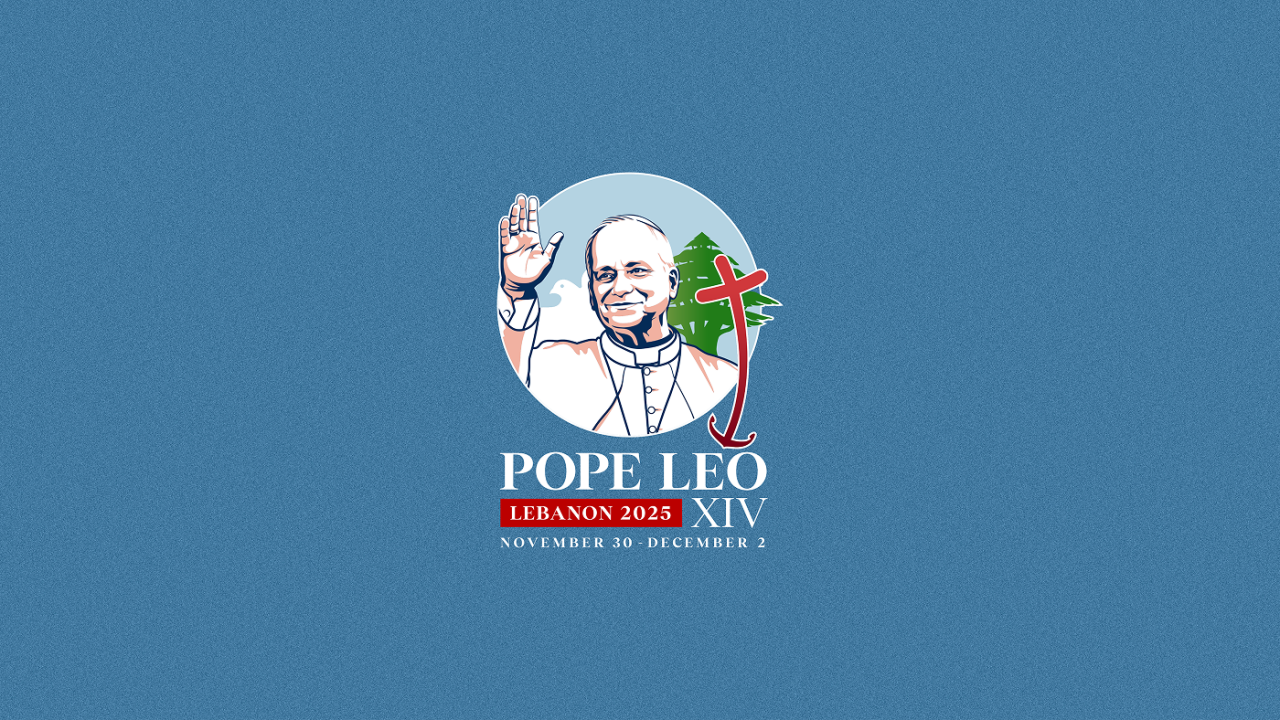
One of the symbols featured in the logo of this journey is the anchor. Pope Francis often referred
to the anchor as a sign of faith that permits us to always move forward, even in the darkest moments, until
we reach heaven. He said: "Our faith is an anchor in heaven. We have anchored our life in heaven. What
must we do? Hold fast to the rope... And we go forward because we are certain that our life is anchored in
peace
heaven, on the shore where we will arrive" (General Audience, 26 April 2017). If we wish to build
we must anchor ourselves to heaven and, firmly set in that direction, let us love without being afraid of
losing those things which pass away and let us give without measure.
From these roots, strong and deep like those of cedars, love grows and with God's help, concrete
and lasting works of solidarity come to life.
Father Youhanna spoke to us of Debbabiyé, the small village where he carries out his ministry.
There, even when faced with extreme need and threatened by bombardment, Christians and Muslims,
Lebanese and refugees from other lands, live together peacefully and help their neighbors. Let us pause
for a moment to consider the image he has evoked: the Syrian coin found in the alms box alongside the
ones from Lebanon. It is an important point. It reminds us that each one of us has something to give and
to receive in love, and that the gift of ourselves to our neighbor enriches everyone and draws us to God.
Pope Benedict XVI, during his journey to this country, spoke about the unifying power of love even in the
moments of trial, saying: "It is here and now that we are called to celebrate the victory of love over hate,
forgiveness over revenge, service over domination, humility over pride, and unity over division....
becoming capable of changing our sufferings into a declaration of love for God and mercy for our neighbor"
(Address, Visit to Saint Paul's Basilica in Harissa, 14 September 2012).
Only in this way can we free ourselves of injustice and oppression, even when, as we have heard,
we are betrayed by people and organizations that ruthlessly exploit the desperation of those who have no
alternative. As a result, we can hope once more for tomorrow, even in the bitterness of the present
difficulties that we must face. In this regard, I am reminded of the responsibility we all bear towards young
people. It is important to foster their presence, even in ecclesial structures, appreciating their fresh
contributions and providing them with opportunities. It is necessary, even among the rubble of a world that
has its own painful failures, to offer them concrete and viable prospects for rebirth and future growth.
Loren has spoken to us of her own work in helping migrants. An immigrant herself, for some time
she has been busy in supporting those forced not by choice but by necessity to leave everything behind in
order to seek a new future far from home. The story she has recounted of James and Lela touches us
profoundly and shows the horror which war produces in the lives of many innocent people. Pope Francis
has reminded us many times in his addresses and writings that we cannot remain indifferent when faced
with similar tragedies, and that their sorrow concerns and challenges us (cf. Homily for the World Day of
Migrants and Refugees, 29 September 2019). On one hand, their courage speaks to us of God's light which,
as Loren said, shines forth even in the darkest moments. On the other hand, their experiences invite us to
take a stand to ensure that no one else will have to flee from his or her country due to senseless and cruel
conflicts, and that whoever knocks at the doors of our communities may never feel rejected, but welcomed
with the words that Loren herself stated: "Welcome home!"
Sister Dima's testimony can also inspire us. When faced with the outbreak of violence, she chose
not to abandon the camp, but rather to keep the school open, making it a place of welcome for refugees and
an extraordinarily efficacious educational center. Indeed, in those rooms, beyond giving assistance and
material help, one learns and teaches to share "bread, fear and hope;" to love in the midst of hate, to serve
even in exhaustion and to believe in a future that exceeds every expectation. The Church in Lebanon has
always cultivated education. I encourage all of you to continue this praiseworthy work. Let your choices,
prompted by the most generous charity, serve to meet the needs, above all, of those who cannot help
themselves and those found in extreme situations. In this way, the formation of the mind will always be
united to the education of the heart. Let us remember that our first school is the Cross and that our one
Teacher is Christ (cf. Mt 23:10).
In this regard, when speaking of his experiences in prison ministry, Father Charbel said that even
where the world sees only walls and criminals, we see the tenderness of the Father, who never tires of
forgiving, reflected in the eyes of the prisoners, sometimes lost, other times illuminated by new hope. And
this is true: we see the face of Jesus reflected in those who suffer and in those who mend the wounds that
life has caused. In a short while, the symbolic gesture of presenting the Golden Rose to this Shrine will
take place. It is an ancient gesture, which has among its various meanings that of exhorting us to be, with
our lives, the fragrance of Christ (cf. 2 Cor 2:14). Before this image, I am reminded of the aroma which
rises from Lebanese tables, renowned for the many types of food offered and the strong sense of community
found in sharing a meal. It is a fragrance made up of a thousand scents that is striking in the diversity of
smells and even in their combination. So too is the fragrance of Christ. It is not an expensive product
reserved for a chosen few, but the aroma wafting from an abundant table laden with different courses, where
all are called to partake. May this be the spirit of the rite which we are about to perform, and above all the
spirit in which we challenge ourselves every day to live united in love.
Dear brother priests and religious,
Dear brothers and sisters, good morning! Sabah al-khayr (in Arabic)
It is a great joy for me to meet with you during this journey, which has "Blessed are the
peacemakers" (Mt 5:9) as its motto. The Church in Lebanon, united in its various facets, is an image of
these words, as Saint John Paul II affirmed with much affection for your people: "In the Lebanon of today,"
he said, "you are the ones responsible for hope" (Message to the Citizens of Lebanon, 1 May 1984); and he
added, "Create, there where you live and work, a fraternal climate. Without ingenuousness, may you know
how to give trust to others and be creative so that the regenerative power of forgiveness and mercy may
triumph" (ibid.).
tell us that these words were
The testimonies that we have heard - thanks to each one of you!
not said in vain. In fact, they have been well-received and acted upon because the communion of charity
continues to be forged here in Lebanon.
In the words of the Patriarch, whom I cordially thank, we can discover the origin of this tenacity,
symbolized by the silent cave in which Saint Charbel prayed before the image of the Mother of God, and
by the presence of the Shrine of Harissa, a symbol of unity for the entire Lebanese people. It is in being
with Mary at the foot of Jesus' Cross (ef. Jn 19:25) that our prayer, that invisible bridge which unites hearts,
gives us the strength to continue to hope and work, even when surrounded by the sound of weapons and
when the very necessities of daily life become a challenge.
One of the symbols featured in the logo of this journey is the anchor. Pope Francis often referred
to the anchor as a sign of faith that permits us to always move forward, even in the darkest moments, until
we reach heaven. He said: "Our faith is an anchor in heaven. We have anchored our life in heaven. What
must we do? Hold fast to the rope... And we go forward because we are certain that our life is anchored in
peace
heaven, on the shore where we will arrive" (General Audience, 26 April 2017). If we wish to build
we must anchor ourselves to heaven and, firmly set in that direction, let us love without being afraid of
losing those things which pass away and let us give without measure.
From these roots, strong and deep like those of cedars, love grows and with God's help, concrete
and lasting works of solidarity come to life.
Father Youhanna spoke to us of Debbabiyé, the small village where he carries out his ministry.
There, even when faced with extreme need and threatened by bombardment, Christians and Muslims,
Lebanese and refugees from other lands, live together peacefully and help their neighbors. Let us pause
for a moment to consider the image he has evoked: the Syrian coin found in the alms box alongside the
ones from Lebanon. It is an important point. It reminds us that each one of us has something to give and
to receive in love, and that the gift of ourselves to our neighbor enriches everyone and draws us to God.
Pope Benedict XVI, during his journey to this country, spoke about the unifying power of love even in the
moments of trial, saying: "It is here and now that we are called to celebrate the victory of love over hate,
forgiveness over revenge, service over domination, humility over pride, and unity over division....
becoming capable of changing our sufferings into a declaration of love for God and mercy for our neighbor"
(Address, Visit to Saint Paul's Basilica in Harissa, 14 September 2012).
Only in this way can we free ourselves of injustice and oppression, even when, as we have heard,
we are betrayed by people and organizations that ruthlessly exploit the desperation of those who have no
alternative. As a result, we can hope once more for tomorrow, even in the bitterness of the present
difficulties that we must face. In this regard, I am reminded of the responsibility we all bear towards young
people. It is important to foster their presence, even in ecclesial structures, appreciating their fresh
contributions and providing them with opportunities. It is necessary, even among the rubble of a world that
has its own painful failures, to offer them concrete and viable prospects for rebirth and future growth.
Loren has spoken to us of her own work in helping migrants. An immigrant herself, for some time
she has been busy in supporting those forced not by choice but by necessity to leave everything behind in
order to seek a new future far from home. The story she has recounted of James and Lela touches us
profoundly and shows the horror which war produces in the lives of many innocent people. Pope Francis
has reminded us many times in his addresses and writings that we cannot remain indifferent when faced
with similar tragedies, and that their sorrow concerns and challenges us (cf. Homily for the World Day of
Migrants and Refugees, 29 September 2019). On one hand, their courage speaks to us of God's light which,
as Loren said, shines forth even in the darkest moments. On the other hand, their experiences invite us to
take a stand to ensure that no one else will have to flee from his or her country due to senseless and cruel
conflicts, and that whoever knocks at the doors of our communities may never feel rejected, but welcomed
with the words that Loren herself stated: "Welcome home!"
Sister Dima's testimony can also inspire us. When faced with the outbreak of violence, she chose
not to abandon the camp, but rather to keep the school open, making it a place of welcome for refugees and
an extraordinarily efficacious educational center. Indeed, in those rooms, beyond giving assistance and
material help, one learns and teaches to share "bread, fear and hope;" to love in the midst of hate, to serve
even in exhaustion and to believe in a future that exceeds every expectation. The Church in Lebanon has
always cultivated education. I encourage all of you to continue this praiseworthy work. Let your choices,
prompted by the most generous charity, serve to meet the needs, above all, of those who cannot help
themselves and those found in extreme situations. In this way, the formation of the mind will always be
united to the education of the heart. Let us remember that our first school is the Cross and that our one
Teacher is Christ (cf. Mt 23:10).
In this regard, when speaking of his experiences in prison ministry, Father Charbel said that even
where the world sees only walls and criminals, we see the tenderness of the Father, who never tires of
forgiving, reflected in the eyes of the prisoners, sometimes lost, other times illuminated by new hope. And
this is true: we see the face of Jesus reflected in those who suffer and in those who mend the wounds that
life has caused. In a short while, the symbolic gesture of presenting the Golden Rose to this Shrine will
take place. It is an ancient gesture, which has among its various meanings that of exhorting us to be, with
our lives, the fragrance of Christ (cf. 2 Cor 2:14). Before this image, I am reminded of the aroma which
rises from Lebanese tables, renowned for the many types of food offered and the strong sense of community
found in sharing a meal. It is a fragrance made up of a thousand scents that is striking in the diversity of
smells and even in their combination. So too is the fragrance of Christ. It is not an expensive product
reserved for a chosen few, but the aroma wafting from an abundant table laden with different courses, where
all are called to partake. May this be the spirit of the rite which we are about to perform, and above all the
spirit in which we challenge ourselves every day to live united in love.